


 01473 824212
Stuart Gets Back to Nature in the New Forest
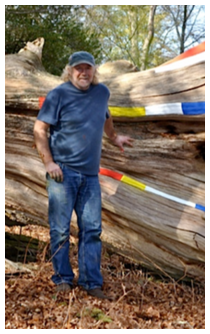
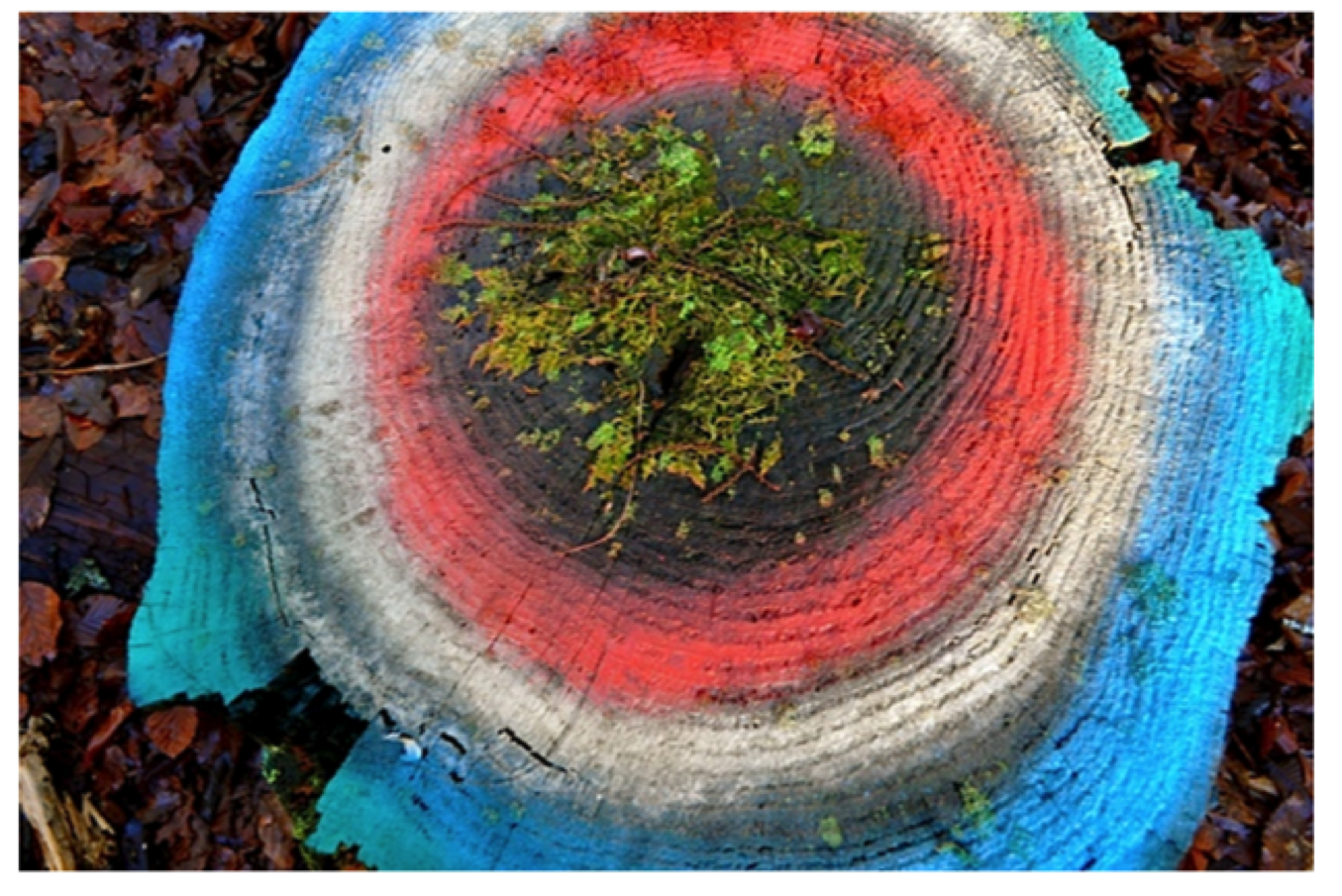
Over the sunny bank holiday weekend Stuart stole away to the stunning New Forest; the perfect setting for a spot of chalk painting. As well as creating some new pieces he also took some of his totem poles with him to photograph against the idyllic woodland backdrop.
The New Forest covers parts of Hampshire, Wiltshire and Dorset and is one of the largest
unenclosed pasturelands in England. The forest contains 150 scheduled ancient monuments like the Moyles Court Bowl Barrow and the Rufus Stone. The forest was designated a ‘royal forest’ in 1079 by William I who wanted to hunt deer and game there. Many houses and churches were demolished in order to create the forest and so the now unpopulated area became known as ‘new’. Two of the Kings sons died in the forest and legend would have us believe that this was his comeuppance for evicting many families in the creation of this hunt land. Later in the 18th Century the timbre in the forest was used by the Royal Navy; with many large plantations being created as a source of wood for boat building. More recently the area was declared a Site of Special Scientific Interest with a large proportion of it being designated a National Park in 2005.
One of the stand out features for many people when they think of the New Forest has to be the famous New Forest Ponies; a breed indigenous to the area. They roam freely over the

open heaths, occasionally wondering into towns and villages much to the delight of visitors.
Stuart loves the combination of space and history in the New Forest that the ancient woodlands and open moorlands provide. He spent a lot of time in the forest during the early morning, soaking up the tranquil atmosphere and painting some of the trees and rocks as the days broke around him. Dusk was another of his favourite times to work, the light and shadow at this time of day adding new dimensions to his artwork and photographs.

Nature has long been inspiring artists and Stuart is no exception. We asked him what he thought it was about the great outdoors that was so provocative.
“The natural world is a constantly changing platform to explore with colour and form. It is the kinetic canvas of forest, grassland, open moors, hillside, mountain, coastline, sea and sky which is frequently the starting point of my expression.
Using colour on wood, rock or sand, forms evolve to punctuate and offer homage to ever changing settings. There is a joy within this harmonious act. Colours will dazzle and change as the day passes.”


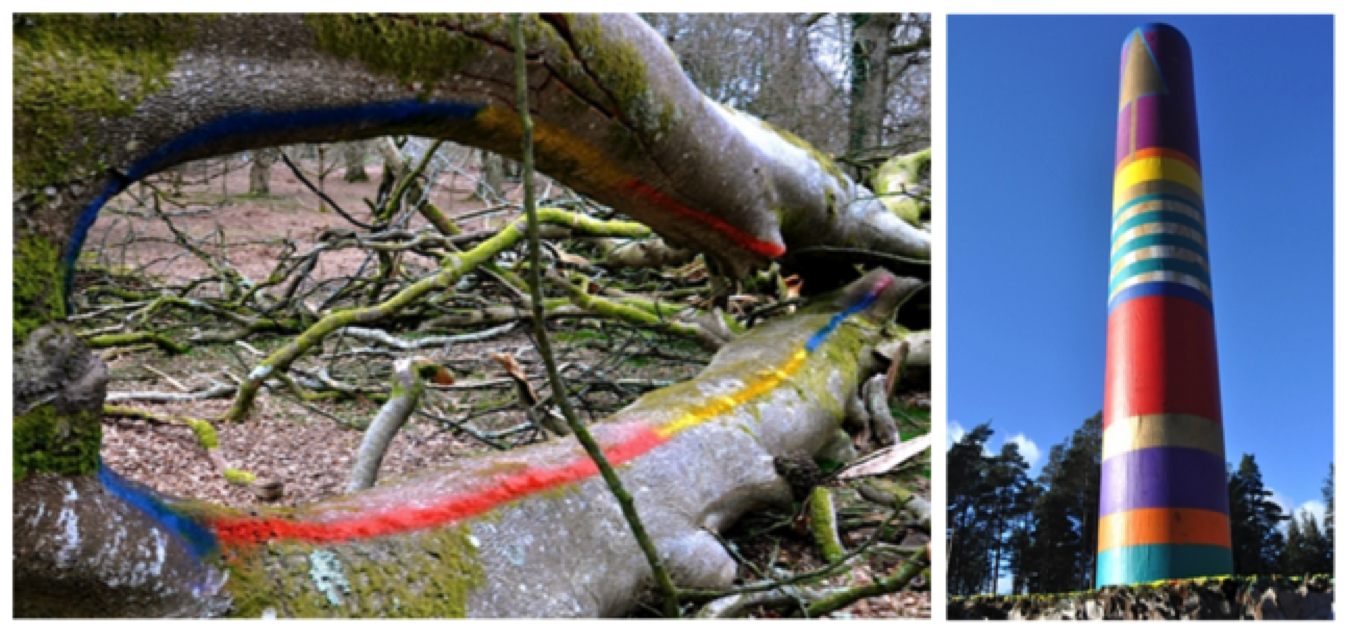
These designs are certainly adding a spot of colour to our lives on a grey and rainy post bank holiday afternoon so a big thank-you to Stuart for sharing them with us!
 01473 824212